

How to Make an AI Commercial: 6 Steps, What It Costs in 2026, and What Goes Wrong Along the Way
Key takeaways
- Script before model. Before you spend a single credit, you need one sentence that explains the ad, a length of 15 or 30 seconds, and a breakdown into shots of 3 to 10 seconds.
- Images are cheap, video is expensive. In KAIA's tracking of my account, a Seedance 2.5 generation averages 96 credits, while a Nano Banana 2.1 image costs 3.
- Spoken dialogue goes through ElevenLabs. The Starter plan at $6 a month is the cheapest one that allows commercial use.
- The market range is very wide. According to SocialOperator, an AI commercial costs $500 to $2,500 if you do it yourself and $10,000 to $30,000 with a full agency.
- Disclosure is a decision, not a technical detail. A study of 358 consumers found that labeling an ad as AI lowers purchase intent, and a 2026 study found it improves perceived credibility, so decide it in the brief.
How to make an AI commercial: what do you need before you start?
I make commercials, films and AI characters for brands at MAOR EDRI AI Productions, the studio I founded in March 2025. With Gulliver, an Israeli travel brand, I created the AI influencers Maya Barkan and Noa Raz. I wrote a guest piece for LetsAI about an AI commercial I made for Baladi, and in May 2026 I generated video live with Seedance 2 on the main stage of the LangTalks conference in front of 1,200 attendees. This guide is my working order, with prices as of November 2026.
Want to see this process live, from idea to cinematic video, including a consistent character and Hebrew lip sync? All the details are on the workshop page.
Join the "Looks Real" workshopYou need four tools. For video and images I work only in Higgsfield, and my main model there is Seedance 2.5. I write about other tools only based on their public pricing, not from experience.
- A video and image platform. According to pricing reviews from October 2026, Higgsfield costs $19 (270 credits), $59 or $47 billed annually (1,200 credits), and $129 or $99 billed annually (3,000 credits). The free tier includes no generation credits.
- Voice and lip sync. According to the ElevenLabs pricing review Cartesia published in October 2026: Starter at $6 (30,000 credits), Creator at $22 (121,000 credits), Pro at $99.
- Writing and storyboarding. Claude or ChatGPT, for the brief, the concepts and the shot breakdown.
- Editing. Any editing software. I also edit in code, with Remotion.
- For comparison only. According to Runway's pricing page: Standard at $15 (625 credits), Pro at $35 (2,250), Max at $95 (9,500).
A note: Higgsfield's pricing changes often, and Higgsfield's own blog from November 2026 says Seedance 2.5 starts on the $49 plan with 1,000 credits. Check the pricing page before you pay.
Step 1: How do you write a brief and script for an AI commercial?
- Write one sentence: what the viewer should feel or do in the last second.
- Set the length and format: 9:16 for social, 16:9 for YouTube and big screens, 15 or 30 seconds.
- Ask Claude or ChatGPT for three concepts that are genuinely different from each other, and pick one.
- Break the script into shots of 3 to 10 seconds: what we see, what we hear, what text appears.
- Write the spoken lines separately, and read them out loud against a clock.
The shot breakdown is also the foundation of your budget. Every row in the shot table is at least one generation in the video model, so the number of rows multiplied by the number of versions you plan to generate per shot gives you a first estimate of the credits you need.
What can go wrong: a script written like a text ad, with three messages in 15 seconds. If you can't explain the commercial in one sentence, the model won't save it.
Step 2: How do you build a storyboard and lock the character and product?
- Generate an opening frame as a still image for every shot in the script.
- Choose one reference image for the character, with the same outfit and the same lighting, and use only that one.
- Photograph the real product from several angles and use those photos as references. According to Higgsfield, Seedance 2.5 accepts up to 50 references in a single generation.
- Arrange the frames in order and check that the story works without sound.
This is the cheap stage. In KAIA's tracking of my Higgsfield account since 10/19/2026, 2,222 images have been logged. Average credits per image: 0 on Soul v2 (1,023 generations), 3 on Nano Banana 2.1 (294 generations), 10 on GPT Image 2 (202 generations). Average per Seedance 2.5 generation: 96 credits across 385 generations. Make your mistakes in images, not in video.
What can go wrong: a character whose face changes between shots, and a product the model "improves" (a different label, a different color). I wrote more about building a consistent character in my piece on AI influencers in Israel and what brands can learn from them.
Step 3: How do you generate the video shots?
- Write the prompt like camera instructions: camera body, lenses, film stock, lighting, camera movement.
- Test motion at 480p: according to Higgsfield, a 10-second shot costs 30 credits at 480p versus 70 at 720p.
- Move to higher resolution only for the shot that worked.
- Generate several versions of each shot and choose, instead of falling in love with the first one.
- Fix a region inside the shot instead of regenerating everything. Seedance 2.5 supports region-level editing.
According to Higgsfield, Seedance 2.5 generates up to 30 seconds in a single take with synchronized sound (ambience, effects and music). The same model can deliver a completely different look if you change the camera language in the prompt, and for social ads that is usually what works.
What can go wrong: hands, text that appears inside the frame, a distorted logo, and a character who jumps between shots. When one model can't hold a particular shot, I switch as needed to another model inside Higgsfield (Veo, Kling, Wan).
Want "5 things I learned this week in AI" in your inbox? Sign up with the form on the blog page.
Join the newsletterStep 4: How do you handle voiceover and lip sync, including in Hebrew?
For context if you're outside Israel: I build my characters to speak Hebrew, a language most voice and lip sync models handle far less reliably than English. The steps below apply in any language, but in Hebrew skipping them shows immediately.
- Produce the voiceover in ElevenLabs before the edit, so the edit is built on its rhythm.
- Pick one voice per character and keep it across the whole campaign.
- Check the pronunciation of the brand name and any words with tricky stress, and spell them phonetically if needed.
- Apply lip sync only to shots where the character speaks to camera.
What can go wrong: a voiceover that sounds translated, and the wrong stress on the brand name. A mistake like that repeats in every version of the ad, at 30, 15 and 6 seconds, which is why you check pronunciation before the edit, not after. According to BigVU, Starter at $6 is the cheapest ElevenLabs plan you're allowed to publish commercially from.
Step 5: How do you edit and export versions for each platform?
- Assemble the shots over the voiceover and music.
- Add subtitles in the edit, not inside the model.
- Add the logo and the real product image as a separate layer.
- Export versions: 30, 15 and 6 seconds, in 9:16 and 16:9.
The 6-second version is not a trimmed 30. It needs one message, one strong shot and the logo, so mark which shot will carry it while you're still in the storyboard.
What can go wrong: a single version that tries to fit TikTok, YouTube and an in-store screen. For comparison, Maidreams Lab prices a 30-second spot with 15- and 6-second cutdowns as one package, and that's the standard to aim for even when you do it yourself.
Step 6: Should you disclose that the commercial was made with AI?
The research here isn't clear-cut. A study published on ScienceDirect with 358 consumers found that labeling an ad as AI-made lowers the ad's perceived value and purchase intent. A study published in 2026 in the Journal of Current Issues & Research in Advertising found that the AI label actually improved the ad's perceived credibility and attractiveness.
- Decide at the brief stage, together with the client, whether and how you'll disclose that the ad was made with AI.
- Check the labeling rules of every platform where the ad will run.
- Set one wording and one fixed placement for the disclosure (on-screen text, in the ad copy, or both).
- Apply the same wording to every version, at 30, 15 and 6 seconds.
Maya Barkan and Noa Raz, the characters I created for Gulliver, were covered as AI influencers by major Israeli outlets including Globes, Maariv, i24NEWS and Channel 13 News. When the character itself is the story, the question of whether to disclose AI no longer comes up.
What can go wrong: a decision made after the versions are already out, so every version has to be reopened in the edit. Or different wording on each platform, which looks like an attempt to hide it.
How much does an AI commercial cost, and how long does it take?
| Option | Cost (per source, 2026) | Time | Best for |
|---|---|---|---|
| DIY, tools only | $500 to $2,500 per asset (SocialOperator); tools from $25 a month (Higgsfield at $19 plus ElevenLabs Starter at $6), or $55 with the $49 plan that, according to Higgsfield, includes Seedance 2.5 | A few working days, depending on experience | Small business, concept testing |
| Boutique AI studio | $3,000 to $10,000 (SocialOperator); €2,800 to €4,500 for a 30-second spot with 15- and 6-second cutdowns (Maidreams Lab) | About 5 production days (Maidreams Lab) | A brand that needs broadcast-ready output |
| Full AI agency | $10,000 to $30,000 including strategy and licensing (SocialOperator) | Depends on scope | Multichannel campaign |
| AI TV commercial | $25,000 to $75,000, versus $250,000 to $500,000 for traditional production (SocialOperator) | Depends on scope | A brand with TV media space |
At the shot level: according to Higgsfield, 10 seconds at 720p in Seedance 2.5 costs 70 credits. On the $49 plan with 1,000 credits, which Higgsfield's blog names as the entry point for Seedance 2.5, that's about $3.43 per shot. At the per-credit price of the $19 plan (270 credits) it would be about $4.93, and according to the same Higgsfield blog post, the same shot costs $7.20 on Runway's entry plan.
A sample calculation from the price list: a 30-second ad made of three 10-second shots, with three 480p tests per shot (30 credits each) and one final 720p version (70) per shot, comes to 480 credits. That's 48% of the monthly allowance on the $49 plan. On my account, per KAIA's tracking, the Seedance 2.5 average is 96 credits per generation across 385 generations, so plan around what you actually generate, not the minimum price.
If you're deciding between doing it yourself and hiring a production, I laid out the options in my piece on AI video production for business and what it costs.
Which mistakes should you avoid in an AI commercial?
- Starting with the model instead of the script. You open Higgsfield before you have one sentence that explains the ad, and burn credits on shots that never make the cut.
- A character who changes between shots. Without a fixed reference image, the viewer sees three different people in 15 seconds.
- Text and logo inside the frame. Subtitles and the logo go on in the edit.
- Budgeting to the minimum. 70 credits per shot is the price list; in practice my Seedance 2.5 average is 96.
- Skipping the 480p test. A motion test costs 30 credits for 10 seconds, less than half of the 70 at 720p.
- Dialogue that sounds translated. A voiceover that hasn't been checked for pronunciation hurts credibility more than any visual flaw.
- One version for every platform. 9:16 and 16:9 are two commercials, not one.
A real example: Maya Barkan, Gulliver's AI influencer
I created Maya Barkan, Israel's first travel influencer who is an AI character, together with Tamar Garzon, CEO of Gulliver, and I run her for them. Noa Raz, the second character, followed. Their three featured videos have reached 359.2K combined views: 229.8K on Instagram and 129.4K on TikTok.
The project was covered on Channel 13 News, on Channel 10 and on the show "Bina Acheret", and Maariv described me as an "entrepreneur and expert in AI-based advertising and content." Every step in this guide, from the brief to the Hebrew voice, also applies to a character who comes back week after week. The difference is that for her, locking the character is everything.
And the numbers from day-to-day work: since 10/19/2026, my Higgsfield account has logged 2,222 images and 385 Seedance 2.5 generations, according to KAIA, the autonomous business manager I built on Claude. 279 people registered for the live broadcast "From Idea to Cinematic Video" on 10/26/2026.
Need an AI commercial or a digital spokesperson for your brand, and don't want to go through all six steps alone? Tell me what you're planning.
Tell me about your projectFrequently asked questions
How much does an AI commercial cost in 2026?
According to SocialOperator, $500 to $2,500 if you do it yourself, $3,000 to $10,000 with a boutique studio, and $10,000 to $30,000 with a full agency. For tools alone, Higgsfield starts at $19 a month (and Seedance 2.5, according to Higgsfield, from the $49 plan), and ElevenLabs at $6.
Can an AI commercial include spoken dialogue in Hebrew or another non-English language?
Yes. You produce the voiceover in ElevenLabs and lip sync it only in shots where the character speaks to camera. The most important part is checking the pronunciation and stress of the brand name before the edit.
How long does it take to produce an AI commercial?
Maidreams Lab prices a 30-second spot with 15- and 6-second cutdowns at 5 production days. When you do it yourself, most of the time goes into the script, the storyboard and choosing between shot versions, not into the generation itself.
Do you need to disclose that a commercial was made with AI?
The research is split: a study of 358 consumers found that the label lowers purchase intent, and a 2026 study found it improves perceived credibility. Either way, decide it in the brief and check the labeling rules of every platform where the ad will run.
Which tool should you start with?
I work only in Higgsfield, with Seedance 2.5 as my main model and Veo, Kling and Wan as needed, so I recommend what I know. Tools like Runway exist on the market with their own pricing, but I haven't worked with them, so I won't compare.
Can you use an AI commercial commercially?
It depends on the plan. Higgsfield's free tier includes no generation credits, and according to BigVU the cheapest ElevenLabs plan you can publish commercially from is Starter at $6. Check each tool's terms of use before the ad goes live.
Can an AI commercial run on TV?
Yes. According to SocialOperator, a 30-second AI-produced TV spot costs $25,000 to $75,000, versus $250,000 to $500,000 for traditional production. According to Higgsfield, Seedance 2.5 also supports 4K generation.
Should you do it yourself or hire a studio?
For concept testing or ongoing social content, DIY is realistic with a tools budget of tens of dollars a month. When you need a character who recurs across a campaign, spoken dialogue in a language models handle poorly, and broadcast-ready output, the time saved by professional production is usually worth the difference.
Want to go through all six steps yourself? The "Looks Real" workshop includes a playbook, a storyboard and skills for ChatGPT, Claude and Higgsfield.
Join the "Looks Real" workshopMaor Edri
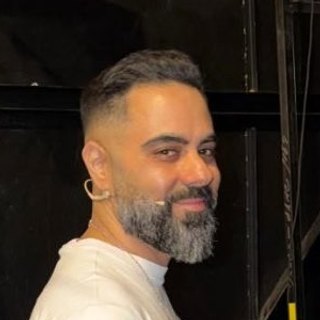
Creative director, director and AI filmmaker from Tel Aviv. I create AI characters, films and ads for brands, and teach AI workshops for companies. My videos reached millions of views and were covered by Israel's Channel 13 News. Here I write what works in practice, with the numbers.
Sources
- Higgsfield Pricing (2026): Plans, Credits & Unlimited Explained
- Seedance 2.5 AI Video Generator with Audio (Higgsfield)
- Seedance 2.5 Pricing: Full Breakdown of Credits, Plans, and Cost per Clip (Higgsfield)
- Seedance 2.5 on Higgsfield in 2026: What You Get and How It Works
- ElevenLabs pricing 2026: plans, credits, and API (Cartesia)
- ElevenLabs Pricing 2026: Plans From $6 to $990 (BigVU)
- Runway pricing in 2026: plans, credits and seconds of video per plan
- AI commercial budget: what it actually costs in 2026 (SocialOperator)
- AI TV Commercial: The 2026 Broadcast Production Guide (SocialOperator)
- How much does an AI-produced commercial cost: 2026 real pricing and timelines (Maidreams Lab)
- Examining the effect of AI advertising involvement disclosure on advertising value and purchase intentions (ScienceDirect)
- Disclosure in AI-Generated Advertising: How Source Credibility Affects Consumer Purchase Intention